
Nouravo guide
Plan a pantry you will actually use
A useful pantry is not a collection of recommended foods. It is a small system of ingredients you like and know how to combine.
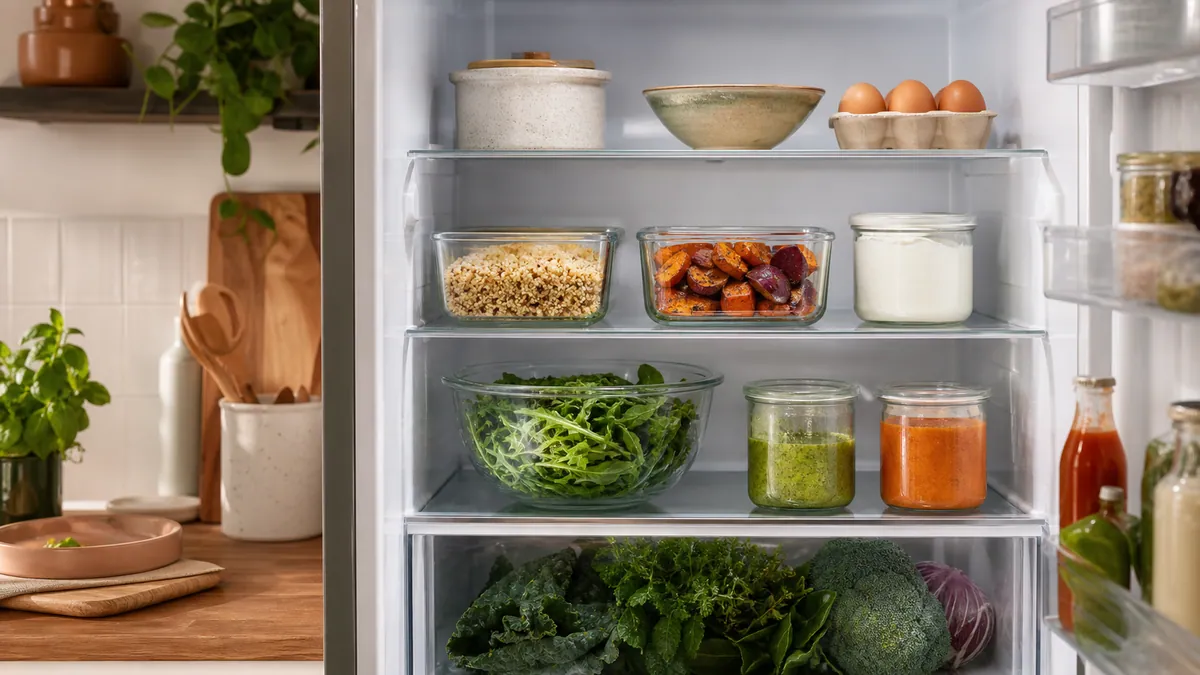
Organise the pantry by meal function
Bases include rice, pasta, bread, oats and couscous. Protein options include beans, lentils, tuna, eggs, tofu or suitable dairy products. Frozen and canned produce covers the fresh gap.
Sauces, spices, stock and spreads make the components taste like a meal. Flavour belongs in the system, not outside it.
Buy ingredients that work together
Before adding an item, name two meals that use it with food already at home. This prevents one-off products from expiring at the back of a cupboard.
Keep the first list short. Variety can come from seasoning and a few rotating fresh foods rather than dozens of permanent staples.
The best pantry is small enough to see and flexible enough to use.
Set a simple replacement rule
Choose a minimum amount for key items, such as one unopened can of beans or one frozen bread portion. Add the item to the list when the minimum is opened.
Review dates and freezer contents regularly. Move older food forward and build one meal around it before buying more.
Frequently asked questions
How many staples do I need?
A short list of five to twelve compatible items can already support several fallback meals.
How do I avoid food waste?
Buy only items linked to familiar meals, keep quantities visible and replace them through a simple minimum rule.
Should I track exact pantry quantities?
Only when it helps. A simple present, low or missing status is enough for many households.
Sources and editorial context
This guide was written by the Nouravo Editorial Team for general everyday orientation. Relevant statements were checked against the following public professional sources:
- World Health Organization: Healthy dietGeneral principles for food variety and diet quality.
- European Commission: Food information to consumersOfficial context for package labels and nutrition information.
Read more about responsibility, source selection and corrections under About Nouravo.
Important context
This information does not replace medical advice. Illness, symptoms, eating disorders and individual nutrition requirements should be discussed with a qualified medical or nutrition professional.