
Nouravo guide
What to eat when the fridge is almost empty
An almost empty fridge is often a combination problem rather than a complete lack of food. Looking across the pantry and freezer reveals more options.
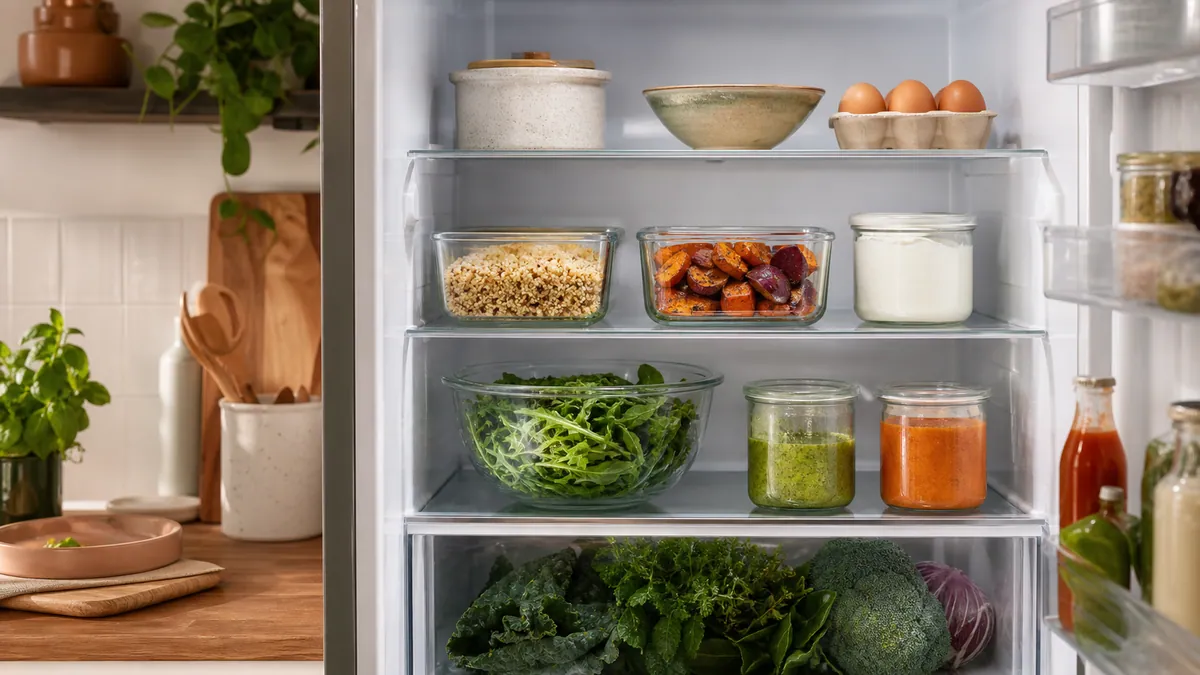
Run a two-minute inventory
Check the cupboard and freezer as well as the fridge. Find one base such as bread, pasta, rice, oats or potatoes, then one protein source and any fruit or vegetable.
A meal does not need every category every time. The system simply helps several small leftovers become more satisfying together.
Combine by function, not by recipe
Pasta with canned tomatoes and beans, rice with tuna and corn, eggs with frozen spinach and bread, or oats with yoghurt and fruit all work from common staples.
Use mustard, tomato paste, stock, herbs, spices or a small sauce for flavour. A practical meal should not taste like a penalty.
Look for roles: base, protein, produce and flavour.
Build your minimum stock list
Choose five to eight items you like and can turn into at least two meals. Frozen bread, eggs, beans, canned tomatoes, frozen vegetables, oats and rice are one possible set.
Your list should match your kitchen and preferences. A pantry is only useful when the food is genuinely eaten and replaced.
Frequently asked questions
What should I always keep at home?
A durable base, two protein options and one or two fruit or vegetable options are a useful starting point.
Is ordering food a bad solution?
No. It can be the sensible option when nothing useful is available or energy is very low.
How do I handle old leftovers?
Follow storage guidance and discard food when cooling history, smell, appearance or packaging raises safety concerns.
Sources and editorial context
This guide was written by the Nouravo Editorial Team for general everyday orientation. Relevant statements were checked against the following public professional sources:
- World Health Organization: Healthy dietGeneral principles for food variety and diet quality.
- European Commission: Food information to consumersOfficial context for package labels and nutrition information.
Read more about responsibility, source selection and corrections under About Nouravo.
Important context
This information does not replace medical advice. Illness, symptoms, eating disorders and individual nutrition requirements should be discussed with a qualified medical or nutrition professional.