
Nouravo guide
Meal prep without committing to a full weekly menu
Meal prep can save time without deciding every meal in advance. Preparing a few useful components creates options rather than obligations.
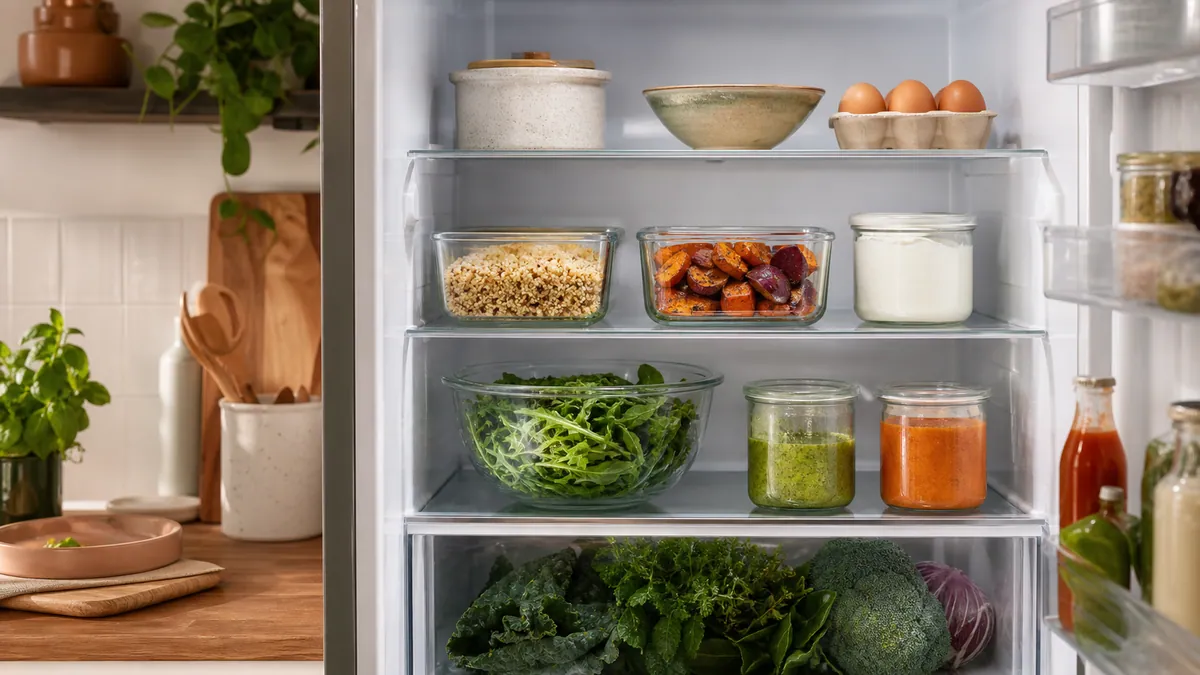
Prepare components, not seven finished boxes
Cook a grain or potatoes, one tray of vegetables and one or two protein sources. Add fresh items and sauces when assembling the meal.
The same rice can become a warm bowl, fried rice, a cold salad or a side. This flexibility is useful when appetite and schedule change.
Choose an amount you will actually use
Start with two or three days rather than filling the entire fridge. Freeze a portion of soup, curry or cooked grains while they are still appealing.
Label containers with contents and date. Place items that need using first where they are visible instead of relying on memory.
Good meal prep reduces future decisions without removing future choice.
Create variety at assembly time
Change sauce, seasoning, crunchy toppings or serving temperature. A bean and grain base can move between Mediterranean, Mexican-inspired and curry flavours.
Keep one unplanned meal slot. Flexibility prevents prepared food from competing with social plans or changing hunger.
Frequently asked questions
How many days should I prep for?
Two or three days is a low-risk starting point. Freeze extra portions promptly.
Do I need identical containers?
No. Clear labels and suitable food-safe storage matter more than matching equipment.
What if I no longer want the prepared meal?
Recombine the components, freeze them safely or leave one meal slot open for flexibility.
Sources and editorial context
This guide was written by the Nouravo Editorial Team for general everyday orientation. Relevant statements were checked against the following public professional sources:
- World Health Organization: Healthy dietGeneral principles for food variety and diet quality.
- European Commission: Food information to consumersOfficial context for package labels and nutrition information.
Read more about responsibility, source selection and corrections under About Nouravo.
Important context
This information does not replace medical advice. Illness, symptoms, eating disorders and individual nutrition requirements should be discussed with a qualified medical or nutrition professional.